
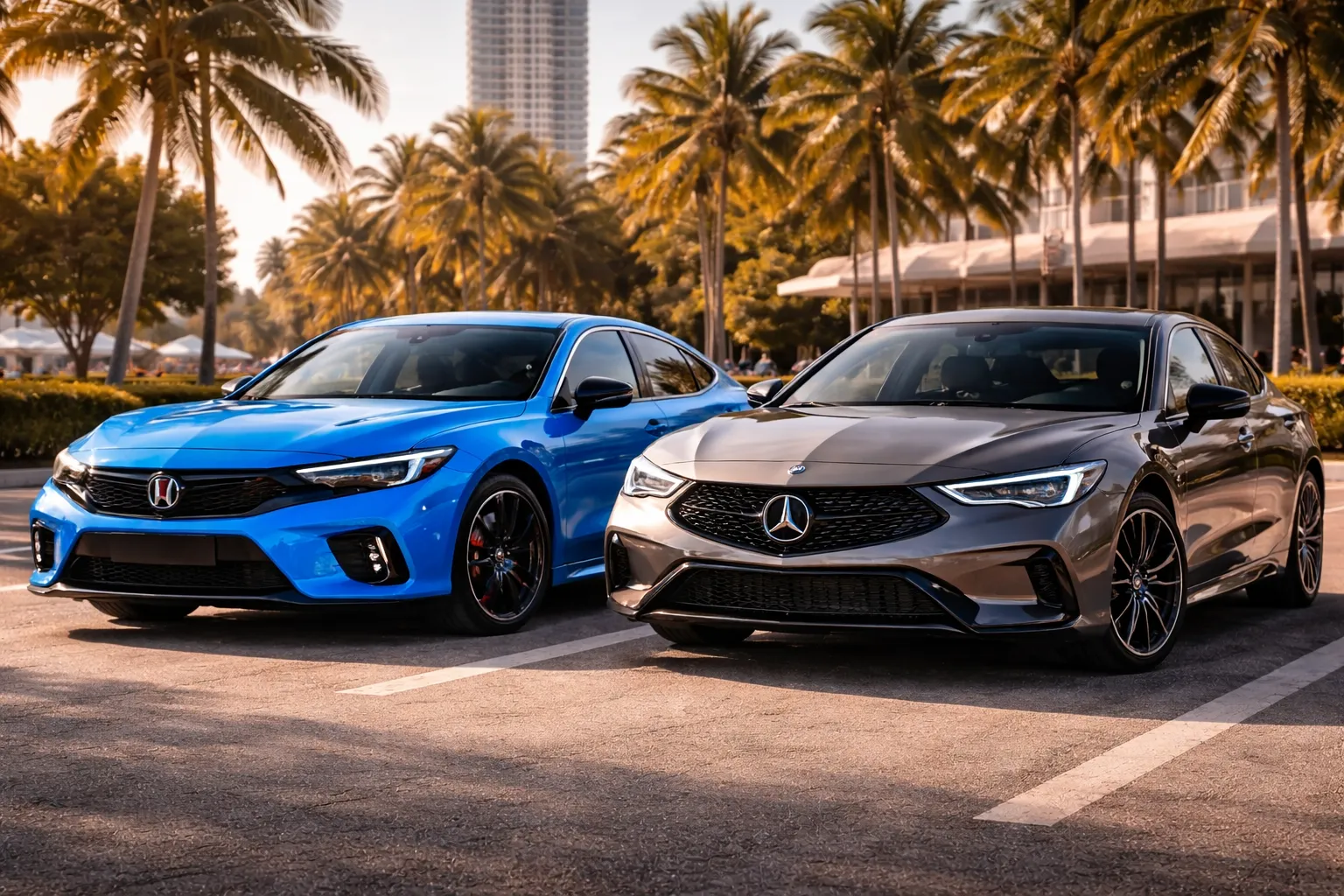
Miami, FL — As the 2026 model year approaches, two highly anticipated compact cars (the 2026 Honda Civic and the 2026 Acura Integra) are drawing attention for their blend of performance, value, and technology. With both vehicles offering compelling upgrades across powertrains, features, and driving dynamics, South Florida drivers now have more options than ever in the compact performance segment.
This comparison breaks down the core differences between the two models, highlights what matters most to Miami-area drivers, and explains why tire and brake considerations are especially important for vehicles in this class.
The following table summarizes core specifications for the 2026 Civic and 2026 Integra based on current manufacturer information and early spec comparisons.
| Specification | 2026 Honda Civic | 2026 Acura Integra |
|---|---|---|
| Base Engine | 2.0-liter naturally aspirated inline-4 | 1.5-liter turbocharged inline-4 |
| Horsepower | ~158 hp (base) | ~200+ hp (Turbo) |
| Transmission | CVT (base), available manual on Si | 6-speed manual or automatic |
| Drivetrain | Front-wheel drive | Front-wheel drive |
| Suspension | MacPherson struts (front) | Sport-tuned • Adaptive available |
| Estimated Starting Price | Lower cost focused | Premium compact sport |
| Target Audience | Everyday driving, efficiency | Sportier dynamics, enthusiast focus |
Source: Edmunds 2026 Honda Civic vs Acura Integra comparison.
Key differences appear in engine output, suspension tuning, and overall positioning: one leaning toward accessibility (Civic) and the other toward performance refinement (Integra). (edmunds.com)
The Civic carries forward as a well-rounded compact offering a balance of comfort, fuel efficiency, and daily usability. For many Miami commuters and first-time buyers, its practicality and lower ownership cost are key draws.
Notable updates include:
The Integra, positioned above the Civic and aligned with the Acura performance brand, emphasizes sport-oriented dynamics and a more engaging driving experience.
Highlights include:
The Integra’s sport-oriented suspension and optional adaptive damping allow tighter cornering and more precise steering, while the Civic’s setup prioritizes comfort and everyday refinement.
High-performance models like the Integra (and even sport trims of the Civic) place extra demands on tires and brakes. For Miami drivers contending with urban traffic, frequent highway merges, and hot weather, choosing the right components and maintaining them is essential for safety, efficiency, and driving enjoyment.
| Tire Feature | Why It Matters |
|---|---|
| Tread Compound | Heat-resistant compounds better handle warm South Florida temperatures. |
| Handling/Grip Ratings | Sportier trims need tires with strong lateral grip for confident cornering. |
| Low Rolling Resistance | Improves fuel efficiency and range on daily commutes. |
Recommended action:
Both models may feature larger brake rotors and upgraded pads on sport-oriented trims. Drivers should pay attention to:
Miami’s driving environment (with its blend of city streets, coastal highways, and frequent peak-period traffic) highlights the importance of balanced performance and durability. Both Civic and Integra appeal to different segments:
Vehicles with sport-tuned suspensions and higher output generally see higher wear on tires and brakes, making proactive maintenance a smart investment for long-term ownership and resale value.
Both 2026 Honda Civic and 2026 Acura Integra bring distinct strengths to the compact segment. From a Royal Tire & Brake perspective, understanding how performance and driving demands differ between models helps you:
For drivers exploring these new models, integrating knowledgeable tire and brake selection into ownership plans is a key step toward maximizing the driving experience.
Learn more: Jaguar’s Next-Gen Electric GT Enters Road-Testing: A New Era for Luxury EV Performance